In the vast majority of real-world, commercial cases, the speed of a machine learning algorithm is more important than it's accuracy. Hear why in today's Five-Minute Friday episode!
The SuperDataScience show's available on all major podcasting platforms, YouTube, and at SuperDataScience.com.

Filtering by Category: Five-Minute Friday
Collecting Valuable Data
Recently, I've been covering strategies for getting business value from machine learning. In today's episode, we dig into the most effective ways to obtain and label *commercially valuable* data.
The SuperDataScience show's available on all major podcasting platforms, YouTube, and at SuperDataScience.com.
Identifying Commercial ML Problems
The importance of effectively identifying a commercial problem *before* starting data collection or machine learning model development is the focus of this week's Five-Minute Friday.
The SuperDataScience show's available on all major podcasting platforms, YouTube, and at SuperDataScience.com.
Tech Startup Dramas
Recently I was hooked on three series: The Dropout (on Theranos), WeCrashed (WeWork), and Super Pumped (Uber). The latter two even feature machine learning, but all three are educational and entertaining.
The SuperDataScience show's available on all major podcasting platforms, YouTube, and at SuperDataScience.com.
Daily Habit #9: Avoiding Messages Until a Set Time Each Day
This article was originally adapted from a podcast, which you can check out here.
At the beginning of the new year, in Episode #538, I introduced the practice of habit tracking and provided you with a template habit-tracking spreadsheet. Then, we had a series of Five-Minute Fridays that revolved around daily habits and we’ve been returning to this daily-habit theme periodically since.
The habits we covered in January and February were related to my morning routine. In March, we began coverage of habits on intellectual stimulation and productivity, such as reading and carrying out a daily math or computer science exercise.
Read MoreDALL-E 2: Stunning Photorealism from Any Text Prompt
OpenAI just released their "DALL-E 2" multimodal model that defines "state of the art" A.I.: Provide it with (even extremely bizarre) natural-language requests for an image and it generates it! Hear about it in today's episode, and check out this interactive post from OpenAI that demonstrates DALL-E 2's mind-boggling capabilities.
The SuperDataScience show's available on all major podcasting platforms, YouTube, and at SuperDataScience.com.
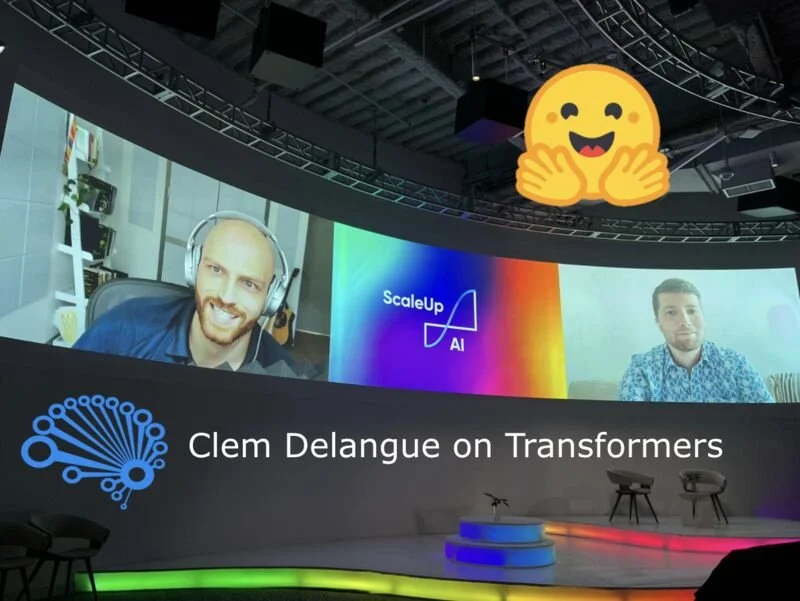
Clem Delangue on Hugging Face and Transformers
In today's SuperDataScience episode, Hugging Face CEO Clem Delangue fills us in on how open-source transformer architectures are accelerating ML capabilities. Recorded for yesterday's ScaleUp:AI conference in NY.
The SuperDataScience show's available on all major podcasting platforms, YouTube, and at SuperDataScience.com.
Daily Habit #8: Math or Computer Science Exercise
This article was originally adapted from a podcast, which you can check out here.
At the beginning of the new year, in Episode #538, I introduced the practice of habit tracking and provided you with a template habit-tracking spreadsheet. Then, we had a series of Five-Minute Fridays that revolved around daily habits I espouse, and that theme continues today. The habits we covered in January and February were related to my morning routine.
Starting last week, we began coverage of habits on intellectual stimulation and productivity. Specifically, last week’s habit was “reading two pages”. This week, we’re moving onward with doing a daily technical exercise; in my case, this is either a mathematics, computer science, or programming exercise.
The reason why I have this daily-technical-exercise habit is that data science is both a limitlessly broad field as well as an ever-evolving field. If we keep learning on a regular basis, we can expand our capabilities and open doors to new professional opportunities. This is one of the driving ideas behind the #66daysofdata hashtag, which — if you haven’t heard of it before — is detailed in episode #555 with Ken Jee, who originated the now-ubiquitous hashtag.
Read MoreDaily Habit #7: Read Two Pages
At the beginning of the new year, in Episode #538, I introduced the practice of habit tracking and provided you with a template habit-tracking spreadsheet. Then, we had a series of Five-Minute Fridays that revolved around daily habits I espouse and that theme continues today. The habits we covered in January and February were my morning habits, specifically:
Starting the day with a glass of water
Making my bed
Carrying out alternate-nostril breathing
Meditating
Writing morning pages
Now, we’ll continue on with habits that extend beyond just my morning with a block of habits on intellectual stimulation and productivity. Specifically, today’s habit is “reading two pages”.
Read MoreJon’s Answers to Questions on Machine Learning
The wonderful folks at the Open Data Science Conference (ODSC) recently asked me five great questions on machine learning. I thought you might like to hear the answers too, so here you are!
Their questions were:
1. Why does my educational content focus on deep learning and on the foundational subjects underlying machine learning?
2. Would you consider deep learning to be an “advanced” data science skill, or is it approachable to newcomers/novice data scientists?
3. What open-source deep learning software is most dominant today?
4. What open-source deep learning software are you looking forward to using more?
5. Do you have a case study where you've used deep learning in practice?
The SuperDataScience show's available on all major podcasting platforms, YouTube, and at SuperDataScience.com.
ODSC's blog post of our Q&A is here.
Jon’s Deep Learning Courses
This article was originally adapted from a podcast, which you can check out here.
Sometimes, during guest interviews, I mention the existence of my deep learning book or my mathematical foundations of machine learning course.
It recently occurred to me, however, that I’ve never taken a step back to detail exactly what content I’ve published over the years and where it’s available if you’re interested in it. So, today I’m dedicating a Five-Minute Friday specifically to detailing what all of my deep learning content is and where you can get it. In next week’s episode, I’ll dig into my math for machine learning content. But, yes, for today, it’s all about deep learning.
Read MoreThe Most Popular SuperDataScience Episodes of 2021
This article was originally adapted from a podcast, which you can check out here.
2021 was my first year hosting the SuperDataScience podcast and, boy, did I ever have a blast. Filming and producing episodes for you has become the highlight of my week. So, thanks for listening — this show wouldn’t exist without you and I hope I can continue to deliver episodes you love for years and years to come.
Speaking of episodes you love, it’s now been more than 30 days since the final episode of 2021 aired. Internally at the SuperDataScience podcast, we use the 30-day mark after an episode’s been released as our quantitative Key Performance Indicator as to how an episode’s been received by you. Episodes accrue tons more listens after the 30 day mark, but we can use that time point after each episode to effectively compare relative episode popularity.
So, you might have your own personal favorites from 2021 but let’s examine the data and see which — quantitatively speaking — were the top-performing episodes of the year.
Read MoreDaily Habit #6: Write Morning Pages
This article was originally adapted from a podcast, which you can check out here.
At the beginning of the new year, in Episode #538, I introduced the practice of habit tracking and provided you with a template habit-tracking spreadsheet. Since then, Five-Minute Fridays have largely revolved around daily habits and that theme continues today. Indeed, having covered most of my morning habits already, namely:
Starting the day with a glass of water
Making my bed
Carrying out alternate-nostril breathing
Meditating
We’ve now reached my final morning habit, which is to compose something called morning pages.
I learned about the concept of morning pages from Julia Cameron’s book The Artist’s Way. It may seem hard to believe now that I’m releasing two podcast episodes and a YouTube tutorial every single week, but five years ago I had staggeringly little creative capacity. I excelled at evaluating other peoples’ ideas and I could execute on ideas very well once they were passed to me, but I self-diagnosed that if I was going to flourish as a data scientist and entrepreneur, I’d need to hone my creativity.
Read MoreDaily Habit #5: Meditate
This article was originally adapted from a podcast, which you can check out here.
At the beginning of the new year, in Episode #538, I introduced the practice of habit tracking and provided you with a template habit-tracking spreadsheet. Since then, Five-Minute Fridays have largely revolved around daily habits and that theme continues today with my daily habit of meditation.
If you’ve been listening to SuperDataScience episodes for more than a year, you’ll be familiar with my meditation practice already, as I detailed it back in Episodes #434 and 436 — episodes on what I called “attention-sharpening tools”. You can refer back to those episodes to hear all the specifics, but the main idea is that every single day — for thousands of consecutive days now — I go through a guided meditation session using the popular Headspace application.
Read MoreDaily Habit #4: Alternate-Nostril Breathing
This article was originally adapted from a podcast, which you can check out here.
Back in Episode #538, I kicked off the new year of Five-Minute Fridays by introducing the practice of habit-tracking, including providing you with a template habit-tracking spreadsheet. I followed that up in Episodes #540 and 544 by detailing for you my habits of starting the day with a glass of water and making my bed, respectively.
Continuing on with my morning habits, today’s episode is about alternate-nostril breathing (ANB).
ANB is often associated with yoga classes so if you do a lot of yoga, you may have encountered this technique before. However, there’s no reason why you can’t duck into a quick ANB session for a couple of minutes at any time. I like having it as one of my morning rituals because it makes me feel centered, focused, and present; as a result, I find myself both enjoying being alive and ready to tackle whatever’s going to come at me through the day. That said, if I’m feeling particularly stressed out or out of touch with the present moment, I might quickly squeeze in a few rounds of ANB at any time of day.
Read MoreDaily Habit #3: Make Your Bed
Back in Episode #538, I kicked off the new year of Five-Minute Fridays by introducing the practice of habit-tracking, including providing you with a template habit-tracking spreadsheet. I followed that up in Episode #540 by detailing for you my habit of starting the day with a glass of water.
So Daily Habit #1 was the meta-habit of tracking your habits. Daily Habit #2 is the morning water glass. That brings us today to my Daily Habit #3, which is another morning habit: making your bed.
Read MoreContinuous Calendar for 2022
This article was originally adapted from a podcast, which you can check out here.
All right, so the past two Fridays, I had episodes for you on daily habits. We’ll continue on with that habit series next week, but I’m interrupting the series today to bring you a time-sensitive message.
Back in Episode #482, which aired in June, I provided you with an introduction to continuous calendars — a rarely used, but from my perspective, vastly superior way of viewing your upcoming deadlines relative to the much more common monthly or weekly calendars.
Read MoreDaily Habit #2: Start the Day with a Glass of Water
This article was originally adapted from a podcast, which you can check out here.
On Five-Minute Friday last week, I introduced the life-transforming concept of daily habit tracking and, if you‘re keen to try it for yourself, I provided an example spreadsheet to get you up and running quickly on your own daily habit tracking journey. If you check out the YouTube version of last week’s episode, you’ll also see that I screenshared the final part of the episode in order to provide a hands-on demonstration of how to configure my habit-tracking template for whatever habits you’d like to track.
Starting with today’s episode, I’ll be recurringly using Five-Minute Fridays to cover the daily habits I track that are most influential in my life. Perhaps they’ll provide food for thought for you or maybe you’ll even try adopting some of them into your own life.
Read MoreDaily Habit #1: Track Your Habits
This article was originally adapted from a podcast, which you can check out here.
In September 2016, Konrad Kopczynski — who happened to be the guest on episode #465 of the SuperDataScience podcast — introduced me to the idea of daily habit tracking.
I appreciate that it’s easy to throw around an expression like “life-changing”, but tracking my habits every day really has been a dramatically life-changing experience. When you wake up every morning and report honestly to yourself on whether you did or didn’t perform a particular good or bad habit yesterday, you open up your eyes to who you really are in a way that our minds otherwise trick us into ignoring or exaggerating.
Read MoreWhat I Learned in 2021
This article was originally adapted from a podcast, which you can check out here.
For the final episode of 2017, of 2018, of 2019, and of 2020, Kirill Eremenko — the founding host of the SuperDataScience podcast — provided a long guest episode that he called “1-on-1 with Kirill: What I Learned in the Past Year”.
For today’s episode, to cap off 2021, I’m going to do something similar. Instead of a long 1-on-1 guest episode, I’m doing it as a shorter Five-Minute Friday episode because I had too many exciting guest interviews in the recording pipeline that I couldn’t wait to publish and share with you.
Like Kirill in his annual recaps, I’m going to go over a list of specific lessons. At the end of 2021, I’ve got five:
Consistency Leads to Results
Delegation is the Key to Successful Scaling
Remote Working Works
Real-Life Smiles Are Essential
All Work and No Play Makes me a Dull Boy
Consistency Leads to Results
All right, so let’s start with Consistency Leads to Results. This one is the kind of advice that sounds obvious, yet we often struggle to actually do it. If you want great results at some challenging pursuit, it ain’t gonna come easy. However, if you work at it with unwavering consistency, the gains do eventually come surprisingly easily and the gains build on themselves rapidly.
To illustrate this, I’m going to give you two examples with hard data to back me up. The first is on growing an audience and the second is on weightlifting.
Read More