
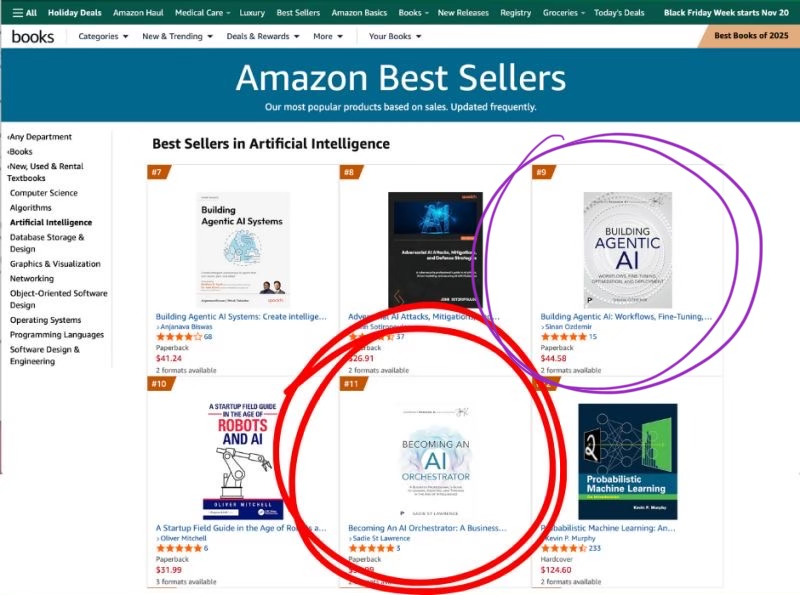
Two books have been published so far in Pearson's "Jon Krohn A.I. Signature Series"... and now both are near the top of Amazon's "Artificial Intelligence" bestsellers list!
Sinan Ozdemir's "Building Agentic A.I." (circled in purple) is in 9th while Sadie St Lawrence's "Becoming an A.I. Orchestrator" (circled in red) is in 11th.
Both books are excellent (as the Amazon reviews quantify) and they are complementary — I (of course!) highly recommend them both.
Filtering by Category: Professional Development
Nested Learning, Spatial Intelligence and the AI Trends of 2026, with Sadie St. Lawrence
The same level of A.I. capability that cost you $100 a year ago now costs ONE dollar. Such radically cheap intelligence changes everything about work and society; today, Sadie St Lawrence explains how!
For the fifth year in a row, we’re kicking the year off by welcoming the inimitable Sadie to the show to:
Predict the five biggest trends in A.I. for 2026, including nested learning, spatial intelligence and AiOps.
Recap how she did on her predictions for 2025.
Bestow four awards for 2025 (biggest “wow” moment, comeback of the year, disappointment of the year, and overall winner).
Get a glimpse at the year ahead, in which intelligence will be vastly cheaper than ever before... transforming work and play for all of us.
📚 Her brand-new book, "Becoming an AI Orchestrator", guides readers to work creatively and confidently alongside intelligent machines. It is part "Jon Krohn's A.I. Signature Series" published by Pearson.
More on Sadie:
Founder and CEO of HMCI.AI, optimizing human-A.I. collaboration in the knowledge economy (amplified by an ecosystem partnership with NVIDIA).
Founded Women In Data™️, a global non-profit spanning 55 countries and empowering 70,000+ data professionals; it earned Top 50 Non-Profit status and was named the premier Women in A.I. & Tech community in 2021.
Named among DataIQ’s Top 100 Most Influential People in Data & A.I. and Dataleum’s Top 30 Women in A.I.
Has educated over 700,000 learners through courses with University of California, Davis, Coursera, and LinkedIn Learning.
This episode can be enjoyed by technical and non-technical folks alike.
The SuperDataScience podcast is available on all major podcasting platforms, YouTube, and at SuperDataScience.com.
In Case You Missed It in November 2025
I learned a lot from these brilliant guests last month. ICYMI, today's episode features the best parts of my conversations with them:
Tyler Cox and Shirish Gupta explain what state-space LLMs (like those incorporating Mamba layers) are and what advantages they have over transformer-only architectures.
Dr. Vijoy Pandey, who leads development of Cisco's open-source platform for the coming "internet of agents", explains a paradigm that allows us to trust agents (from a privacy and security perspective).
Fabi.ai co-founder Marc Dupuis details how to navigate several key organizational metrics simultaneously so that teams don’t lose sight of their goals and, crucially, so that AI models stay aligned with us too.
Santa Clara University professor Maya Ackerman and I discuss the importance of keeping human interests and welfare at the centre of the AI conversation.
The SuperDataScience podcast is available on all major podcasting platforms, YouTube, and at SuperDataScience.com.
Book Two in the Pearson AI Signature Series Has Arrived
Announcing today: The second book in my "Pearson AI Signature Series" is "Becoming an AI Orchestrator" by the inimitable Sadie St Lawrence!
Read MoreWhy 95% of AI Projects Fail and How to Be the 5% with Jon Krohn
95% of AI projects fail.
Here’s how to be the 5%.
On the latest episode of the Signal to Noise Podcast, I sat down with Michael Newcomer to unpack:
Why AI capabilities are doubling every seven months
How to identify and prioritize high-ROI AI projects
The #1 trait of a great data scientist
… and much more!
If you're leading AI adoption or just trying to stay sane while doing it, this one's essential.
Odds of AGI by 2040? LEAP Expert Forecasts and Workforce Implications
What are the odds of AGI (roughly, a machine with all the cognitive abilities of a human adult) by 2040? Based on predictions by >300 experts, read on for the skinny...
Read MoreIntroducing the First Book in My A.I. Signature Series
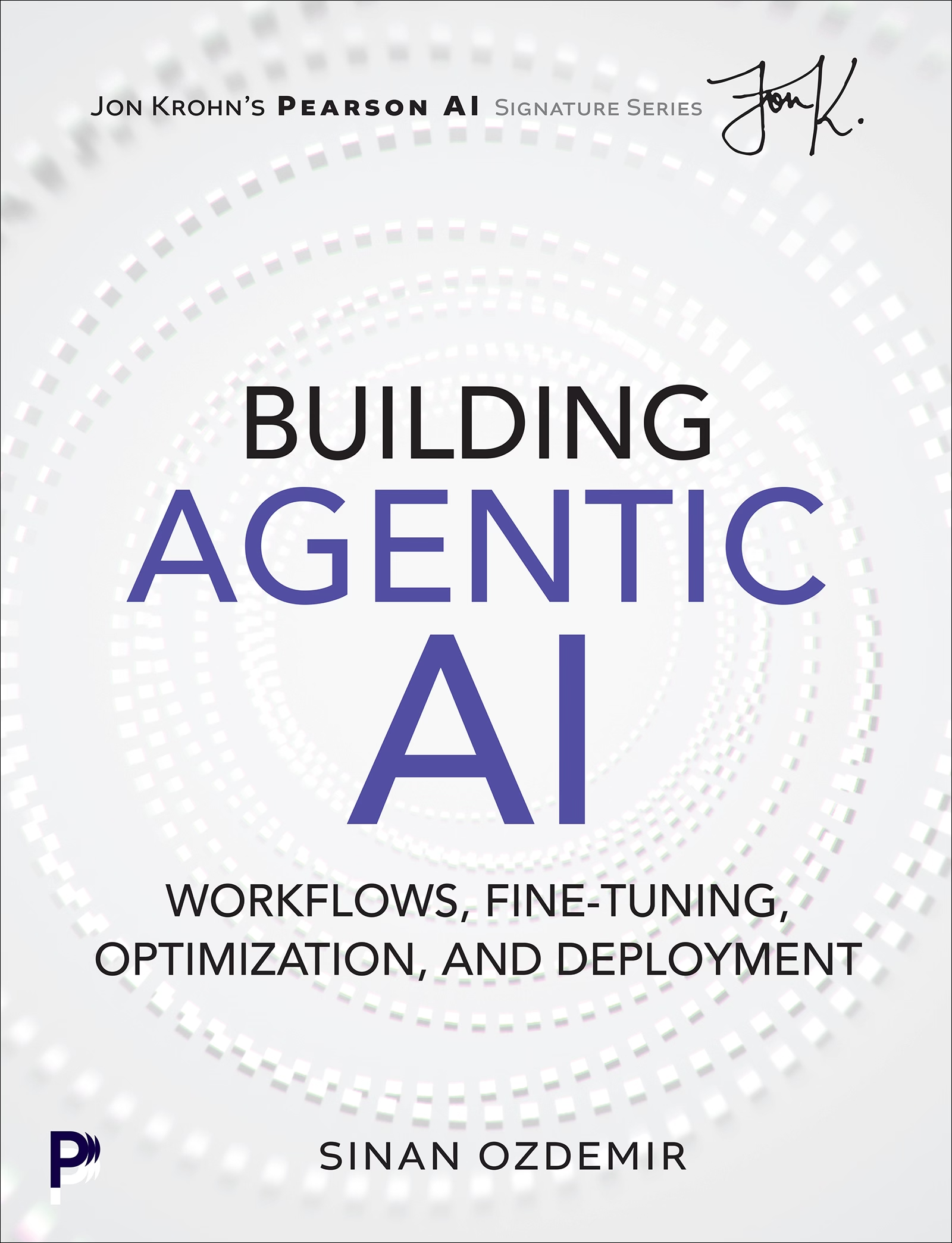
I'm delighted to announce that the first book in my "Pearson A.I. Signature Series" is "Building Agentic AI" by the prolific author Sinan Ozdemir... and it will be published on Sunday!
It's available for pre-order now worldwide from wherever you buy your books! You can also read a digital version in the O'Reilly platform today if you have access to it.
The book is packed with hands-on examples in Python and it allows you to master the complete agentic A.I. pipeline, including practical guidance and code on how to:
Design adaptive A.I. agents with memory, tool use, and collaborative reasoning capabilities.
Build robust RAG workflows using embeddings, vector databases and LangGraph state management.
Implement comprehensive evaluation frameworks beyond just "accuracy"
Deploy multimodal A.I. systems that seamlessly integrate text, vision, audio and code generation.
Optimize models for production through fine-tuning, quantization and speculative decoding techniques.
Navigate the bleeding edge of reasoning LLMs and computer-use capabilities.
Balance cost, speed, accuracy and privacy in real-world deployment scenarios.
Create hybrid architectures that combine multiple agents for complex enterprise applications.
Thanks to Debra Williams Cauley, Dayna Isley and many more at Pearson for bringing this series to life. The second book in the series will be available in December and I'll announce that shortly!
Where to Find Me at Web Summit 2025
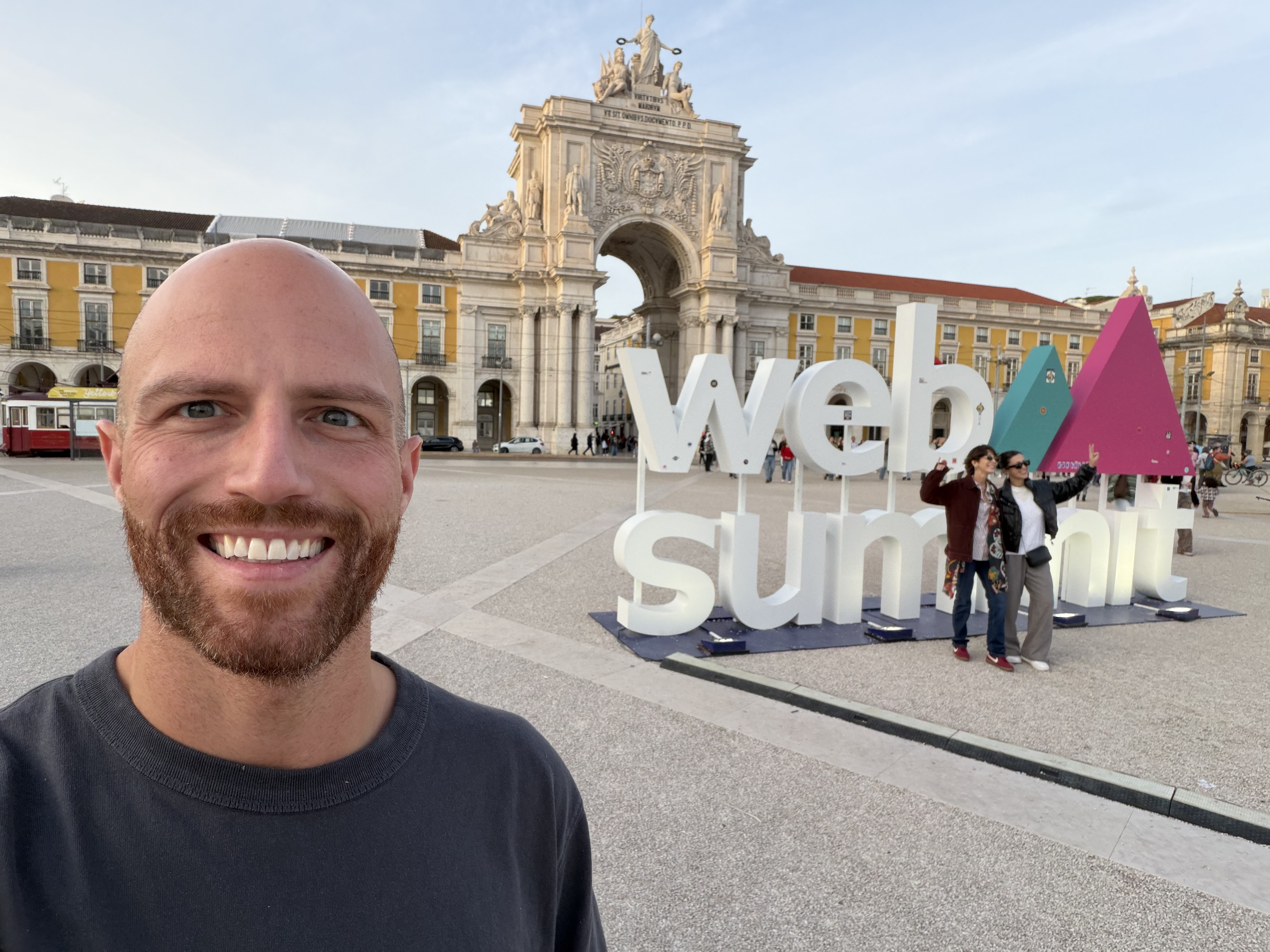
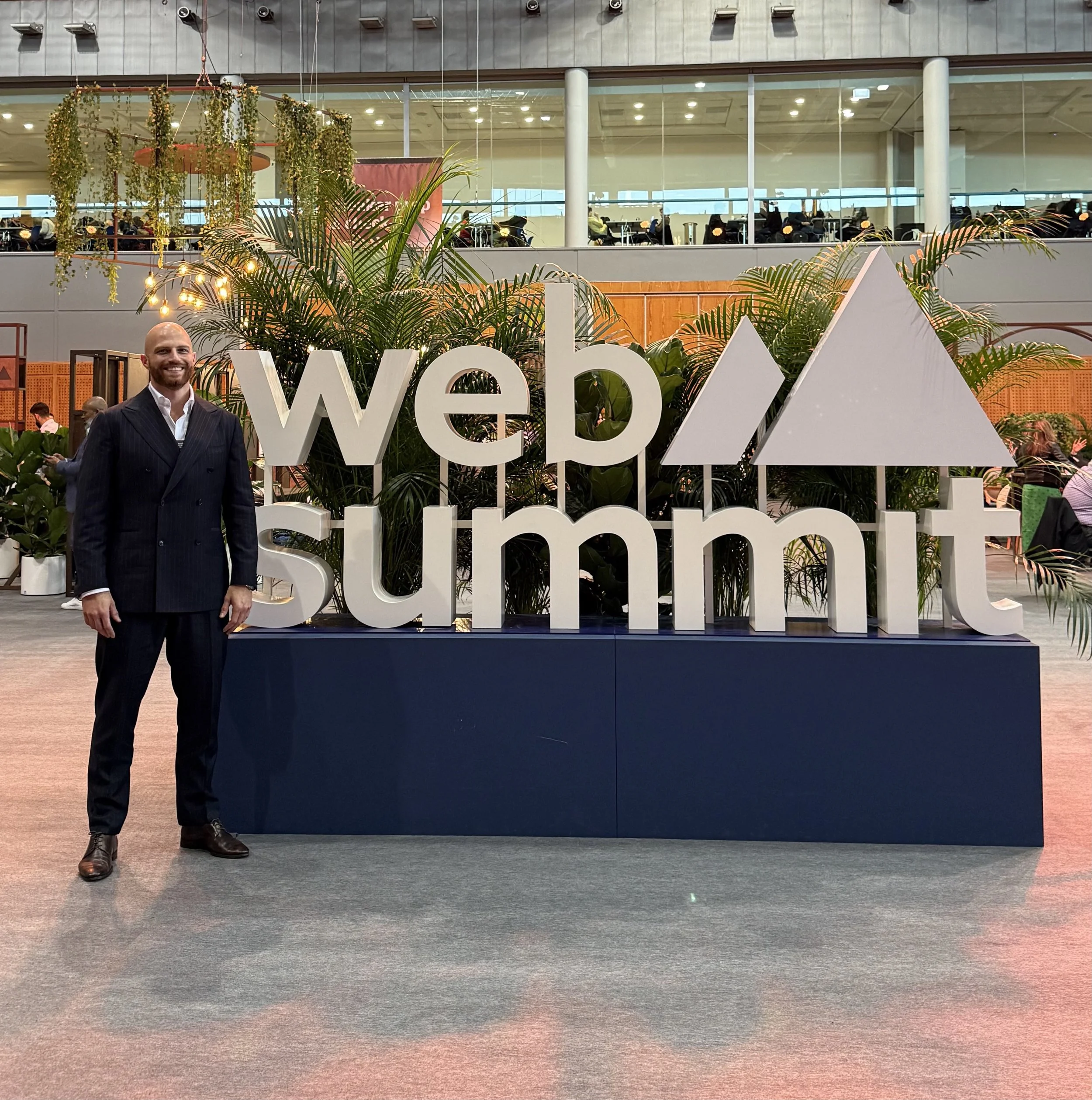
Hello from Lisbon — hope to see you at Web Summit this week! I'll be speaking, emceeing, hosting a meetup and judging a startup competition. Here's where you can catch me:
Tue Nov 11 at 11:30am: I'll be hosting a "Beyond the Stage" Meetup for founders and execs on successful Agentic A.I. projects (at Meetup Location 2).
Tue Nov 11 at 3pm: I'll be a judge in the "Startup Pitch" competition (on Stage 9).
Wed Nov 12 at 1:20pm: "Intro to Agentic A.I." afternoon-opening keynote on the Developer Summit stage.
Wed Nov 12 from 1:40pm to 4pm: Emceeing the Developer Summit stage.
Thu Nov 13 at noon: I'll be providing one-to-one guidance to tech startups on scaling effectively (this is at the official "Mentor Hours" location).
Thanks to Brendan Garrett and Jack Knox for inviting me back! Can't wait :)
See You at Web Summit 2025
Looking forward to returning to Lisbon for Web Summit from Nov 10 to 13. See you there? Here's what I'll be up to:
Tue Nov 11 at 11:30am: I'll be hosting a "Beyond the Stage" Meetup for founders and execs on successful Agentic A.I. projects (at Meetup Location 2).
Tue Nov 11 at 3pm: I'll be a judge in the "Startup Pitch" competition (on Stage 9).
Wed Nov 12 from 1:20pm to 4pm: I'll be emceeing the Developer Summit stage, including providing a talk on Agentic A.I. to open up the afternoon session.
Thu Nov 13: I'll be providing one-to-one guidance to tech startups on scaling effectively (time and location TBC).
95% of Enterprise AI Projects Fail (Per MIT Research)
According to a recent study by researchers at MIT, 95% of enterprise A.I. projects fail. Why? And how can we be amongst the 5% that succeed?
Read MoreGraph Algorithms, GraphRAG and Causal Graphs, with Graph Guru Amy Hodler
For *years*, I'd been trying to get Amy Hodler on my show. Finally she's here! A graph-network guru, Amy fills us in on graph algorithms and cutting-edge applications like GraphRAG and Causal Graphs. Enjoy!
More on Amy:
Graph-tech evangelist and co-author of O'Reilly books on Graph Algorithms and Knowledge Graphs.
Decades of experience in emerging tech at companies like HP, Hitachi, Neo4j, and Cray.
Founder of GraphGeeks.org, a community for people passionate about graphs and connected data.
Today's episode will probably appeal most to hands-on data/AI practitioners but Amy is such a tremendous communicator that anyone who wants to know the latest on graph networks (and their powerful real-world use-cases!) will enjoy it.
The SuperDataScience podcast is available on all major podcasting platforms, YouTube, and at SuperDataScience.com.
Landing $200k+ AI Roles: Real Cases from the SuperDataScience Community, with Kirill Eremenko
As we approach episode #900, the original SuperDataScience Podcast host Kirill Eremenko returns to reflect on what leads to the highest-paying opportunities in AI. This is a special one; enjoy!
Many of you will already know Kirill:
Founder and CEO of SuperDataScience.com, the eponymous e-learning platform.
Founded the SuperDataScience Podcast nine years ago and hosted the show until he passed me the reins five years ago.
With over 3 million students, he’s the most popular data science and A.I. instructor on Udemy.
He holds a Master’s from The University of Queensland in Australia and a Bachelor’s in Applied Physics and Mathematics from the Moscow Institute of Physics and Technology.
Today’s episode is ideal for anyone looking to advance their data science or A.I. career — or looking to break into a career in this field for the first time.
In today’s episode, Kirill details:
Why employers are still testing A.I. engineers on basic machine learning fundamentals — even for LLM-focused roles.
The surprising reason why staying in data science (as opposed to developing an A.I. specialization) could be the right career move for you.
How one developer discovered the hidden age bias in tech recruiting — and the simple hack to beat it.
The two critical skill areas that separate amateur A.I. engineers from the pros commanding huge salaries.
Why the "back to office" movement could give you a competitive advantage in landing a top A.I. role.
The SuperDataScience podcast is available on all major podcasting platforms, YouTube, and at SuperDataScience.com.
In Case You Missed It in April 2025
We had a record number of guests on my podcast in April — and they were spectacular! In today's "In Case You Missed It" episode, hear the best parts of my conversations with each of them.
The specific conversation highlights included in today's episode are:
Sama Bali from NVIDIA and Logan Lawler from Dell Technologies fill us in on the AI software stack on NVIDIA GPUs, including libraries like CUDA.
Continuing on the A.I. hardware topic, Emily Webber details Amazon Web Services (AWS)'s own A.I. accelerator chips.
Zerve AI's co-founder Dr. Greg Michaelson describes how data scientists can deploy A.I. models to production without needing to call on an engineering team.
Kai Beckmann, CEO of Merck KGaA's semiconductor business, describes intricate details of the semiconductors that make A.I. systems hum.
Finally, Shirish Gupta explains his "A-I-P-C" framework for finding out if you should be using edge compute for local A.I. inference instead of relying on cloud compute.
The SuperDataScience podcast is available on all major podcasting platforms, YouTube, and at SuperDataScience.com.
Calling Clinicians: Help Us Build the Future of AI Therapy
I recently began supervising a PhD student in the Auckland robotic-engineering department and we are looking to partner with psychotherapists to develop a companion robot. Do you know anyone relevant/interested?
(I promise that our eventual robotic solution will not be a two-headed monstrosity featuring my face on a kiwi bird's body... but maybe it helped get your attention 😂)
Through several years of upcoming R&D at The University of Auckland (I will mostly be supervising remotely from New York!), our project aims to develop a therapeutic A.I. model (e.g., a multi-modal Large Language Model) to power the conversational, perceptual and (potentially) real-time video-generation capabilities of a companion robot that gives its user (which could be in a clinical or at-home setting) personalized therapy and support when a human therapist is unavailable.
A particularly prominent challenge for us in developing and testing this LLM (and, eventually, robotic embodiment) is access to data from real therapeutic conversations, although there are other immediate and long-term R&D challenges that we would love practicing therapists to help us with as well.
This is an exciting, impactful project that could markedly improve millions of lives around the world in the coming decades. I applaud PhD candidate Maryam Khakpour for tackling it head on! If you're a clinician who's keen to be involved with the A.I. revolution, now's your chance :)
Serverless, Parallel, and AI-Assisted: The Future of Data Science is Here, with Zerve’s Dr. Greg Michaelson
What are "code nodes" and "RAG DAGs"? Listen to today's episode with the highly technical (but also highly hilarious) Dr. Greg Michaelson to get a glimpse into the future of data science and A.I. model development.
Greg:
Is a Co-Founder of Zerve AI, a super-cool platform for developing and delivering A.I. products that launched to the public on this very podcast a little over a year ago.
Previously spent 7 years as DataRobot’s Chief Customer Officer and 4 years as Senior Director of Analytics & Research for Travelers.
Was a baptist pastor while he obtained his PhD in Applied Statistics!
Today’s episode is on the technical side and so will appeal most to hands-on practitioners like data scientists, AI/ML engineers and software developers… but Greg is such an engaging communicator that anyone interested in how the practice of data science is rapidly being revolutionized may enjoy today’s episode.
In it, Greg details:
How Zerve's collaborative, graph-based coding environment has matured over the past year, including their revolutionary 'Fleet' feature (in beta) that allows massive parallelization of code execution without additional cost.
How AI assistants are changing the coding experience by helping build, edit, and connect your data science projects.
Why the rise of LLMs might spell trouble for many SaaS businesses as building in-house solutions becomes increasingly viable.
The innovative ways companies are using retrieval-augmented generation (RAG) to create more powerful A.I. applications.
The SuperDataScience podcast is available on all major podcasting platforms, YouTube, and at SuperDataScience.com.
In Case You Missed It in March 2025
We had absolutely killer guests and killer conversations on my podcast in March. This isn't bluster; I learned a ton from Andriy, Richmond, Natalie and Varun... Today's episode features all the best highlights!
The specific conversation highlights included in today's episode are:
The mega-bestselling author of "The 100-Page Machine Learning Book" (and now "The 100-Page Language Models Book"!) Dr. Andriy Burkov on the missing piece of AGI: Why LLMs can't plan or self-reflect.
Relatedly, the fascinating and exceptionally well-spoken Natalie Monbiot contrasted artificial intelligence with the human variety, detailing what makes us unique.
The charismatic software engineer Richmond Alake (of MongoDB) explained his "A.I. Stack" concept and how you can leverage it to build better A.I. applications.
Former Google Gemini engineer Varun Godbole provides a helpful overview of guide to neural network design, the (freely available!) "Deep Learning Tuning Playbook".
The SuperDataScience podcast is available on all major podcasting platforms, YouTube, and at SuperDataScience.com.
In Case You Missed It in February 2025
February was another insane month on my podcast. In addition to having stunning smiles, all four guests I hosted are fascinating, highly knowledgeable experts. Today's episode features highlights of my convos with them.
The specific conversation highlights included in today's episode are:
Professional-athlete-turned-data-engineer Colleen Fotsch on how DBT simplifies data modeling and documentation.
Engineer-turned-entrepreneur Vaibhav Gupta on the new programming language, BAML, he created for AI applications. He details how BAML will save you time and a considerable amount of money when calling LLM APIs.
Professor Frank Hutter on how TabPFN, the first deep learning approach to become the state of the art for modeling tabular data (i.e., the structured rows and columns of data that, until now, deep learning was feeble at modeling).
The ebullient Cal Al-Dhubaib on the keys to scaling (and selling!) a thriving data science consultancy.
The SuperDataScience podcast is available on all major podcasting platforms, YouTube, and at SuperDataScience.com.
In Case You Missed It in January 2025
Happy Valentine's Day 💘 ! My high-calorie gift to you is today's episode, which features the best highlights from conversations I had with the (absolutely epic!) guests I hosted on my podcast in January.
The specific conversation highlights included in today's episode are:
Famed futurist Azeem Azhar on how to break your linear mindset to prepare for the exponential technological change that we are experiencing (and will experience even more rapidly in years to come).
Global quantum-computing expert Dr. Florian Neukart on practical, real-world applications of quantum computing today.
Kirill Eremenko and Hadelin de Ponteves — who have together taught over 5 million people data science — with their 12-step checklist for selecting an appropriate foundation model (e.g., large language model) for a given application.
Brooke Hopkins (former engineer at Waymo, now founder and CEO of Y Combinator-backed startup Coval) on why you should evaluate A.I. agents with reference-free metrics.
The SuperDataScience podcast is available on all major podcasting platforms, YouTube, and at SuperDataScience.com.
From Pro Athlete to Data Engineer: Colleen Fotsch’s Inspiring Journey
Colleen Fotsch won national swimming championships and was a pro athlete in both CrossFit and bobsledding. Now she's excelling at data analytics and engineering! Today, hear her fun, inspiring and practical story.
More on Colleen:
As a collegiate swimmer, she won national championships and set an American record in the relay.
As a pro CrossFit athlete, she twice competed at the “Games”, which is the highest echelon of the sport.
And then she simultaneously pursued a degree in data analytics while training with the US Bobsled team.
An injury ended her Olympic Bobsled team dream, but luckily she’d been pursuing that analytics career in parallel!
She began working full-time as a data analyst four years ago and has now grown into a data-engineering leadership role at a healthcare-staffing firm called CHG Healthcare in Utah, where she serves as Senior Technical Manager of their Data Platform.
Inspires her 280,000 Instagram followers on a daily basis.
Today’s episode essentially has two separate parts:
The first half focuses on Colleen’s exciting journey to the highest levels of three sports: swimming, CrossFit and bobsledding. That part should be fascinating to just about anyone.
The second half covers Colleen’s transition into data analytics and data engineering; that part will appeal to technically-minded listeners, particularly ones considering a career in or early on in a career in analytics or engineering.
In today’s episode, Colleen details:
The connection between a competitive sports mindset and data-career success.
Proven strategies for being hired into your first data role later in your career.
Why being "not smart enough" for coding was a mental block she had to overcome.
How analytics engineering bridges the gap between data engineering and analysis.
The huge benefits deskbound professionals can enjoy by including regular exercise in their week, and tips and tricks for developing or growing an exercise habit.
The SuperDataScience podcast is available on all major podcasting platforms, YouTube, and at SuperDataScience.com.
Exponential Views on AI and Humanity’s Greatest Challenges, with Azeem Azhar
Today, the famed futurist Azeem Azhar eloquently details the exponential forces that are overhauling society — and why A.I. is essential for solving humanity's biggest challenges. This is a special episode; don't miss it!
In case you aren't familiar with his legendary name already, Azeem:
Is creator of the invaluable "Exponential View" newsletter (>100k subscribers).
Hosts the "Exponential View" podcast (well-known guests include Tony Blair and Andrew Ng).
Hosted the Bloomberg TV show "Exponentially" (guests include Sam Altman).
Holds fellowships at Stanford University and Harvard Business School.
Was Founder & CEO of PeerIndex, a venture capital-backed machine-learning startup that was acquired in 2014.
He holds an MA in PPE (Politics, Philosophy and Economics) from the University of Oxford.
Today’s episode will appeal to any listener. In it, Azeem details:
The exponential forces that will overhaul society in the coming decades.
Why AI is essential for solving humanity's biggest challenges.
His own cutting-edge, personal use of A.I. agents, LLMs, and automation.
Why there's no 'solid ground' in the future of work and how we can adapt.
The SuperDataScience podcast is available on all major podcasting platforms, YouTube, and at SuperDataScience.com.